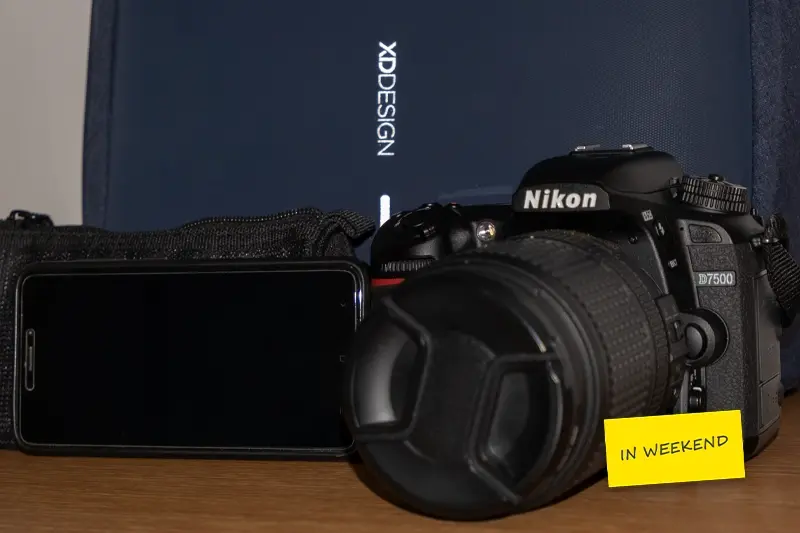
Mobile Phone
The mobile phone is the most common and practical device we always carry with us. Its greatest advantage is accessibility—you can use it instantly, without any preparation. In addition to taking photos, it serves many other purposes: communication, GPS navigation, payments, browsing, and much more.
It is compact and does not take up extra space in your luggage. Modern flagship phones can even shoot in RAW format and use advanced computational photography features to improve image quality.
However, one major drawback is battery life. You may find yourself taking fewer photos in order to save battery for essential tasks. Although power banks can help, recharging takes time and may cause you to miss important moments. Another limitation is the small sensor size compared to professional cameras, which affects image quality, especially in low-light conditions.
Action Cameras
Action cameras, such as those made by GoPro or DJI, are extremely compact yet surprisingly powerful. If you travel often and want something lightweight, this can be an excellent choice.
They are built to be durable and are specifically designed for sports and outdoor activities. One of their strongest advantages is image stabilization, which allows you to capture smooth footage even while moving—whether you are cycling, hiking, or practicing extreme sports.
They are also waterproof, which makes underwater photography and videography possible—something much harder to achieve with a phone or professional camera without extra equipment. Another practical benefit is the ability to replace batteries, allowing longer shooting sessions without interruption.
Their limitations are relatively minor. While they can produce very good image quality, they still do not match the performance of professional cameras. They also do not offer interchangeable lenses, which means you are limited to a fixed field of view and have less creative control over framing and composition.
Professional Camera
Compared to the previous options, DSLR and mirrorless cameras provide superior image quality, more detail, and better dynamic range. These cameras are specifically designed for high-end photography and are ideal if you want to capture landscapes, portraits, or highly detailed scenes.
One of their biggest advantages is flexibility. With interchangeable lenses, you can adapt to different shooting situations. For example, a 200 mm lens allows you to photograph wildlife from a distance without disturbing it.
Professional cameras also come with larger sensors, which greatly improve low-light performance and allow for better depth of field control. However, they do require technical knowledge. Without a proper understanding of exposure, focus, and camera settings, you may end up with blurry or poorly exposed images.
They are also bulkier and heavier than the other options. Carrying extra lenses and accessories often requires a dedicated backpack, which may become inconvenient during travel.
Final Thoughts
There is no universal “best camera.” The best camera is the one that suits your needs and that you will actually use.
If you want simplicity and convenience, the smartphone is the most practical choice.
If portability and dynamic shooting—especially video—matter most to you, an action camera is ideal.
If your goal is maximum image quality and creative control, a professional camera is the right investment.
Before making a decision, think carefully about your needs, your level of experience, and your budget. Buying expensive equipment that you will not fully use can quickly turn into an unnecessary expense. Choose wisely and focus on capturing the moments that truly matter.