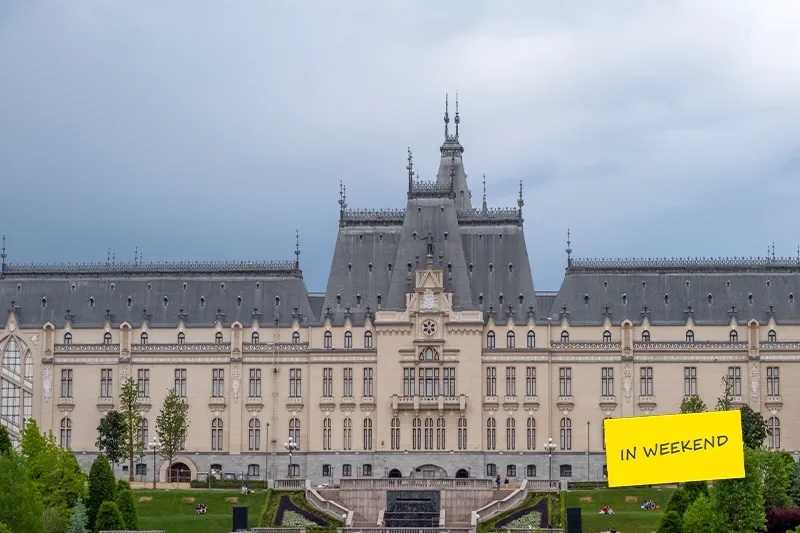
Welcome to the Palace of Culture in Iași, a destination that takes you on a journey through time and space. Here, mystery intertwines with art, history reveals itself through its walls, and culture shines in every corner. Built with dedication and passion between 1906 and 1925, under the guidance of the talented architect I.D. Berindei, this remarkable palace was originally intended to host the administrative and cultural institutions of Iași. Today, it stands as a true treasure, housing prestigious institutions such as the Art Museum, the Central University Library “Mihai Eminescu”, and the National Theatre “Vasile Alecsandri”.
Ion D. Berindey was a renowned Romanian architect, best known for designing and constructing the Palace of Culture in Iași. Born in 1871 in Bucharest, Berindey dedicated his career to significantly contributing to the development of Romanian architecture and to creating remarkable buildings.
After graduating from the National School of Bridges and Roads in Bucharest, Berindey continued his architectural studies at the École des Beaux-Arts in Paris, one of the most prestigious architecture schools in the world. There, he became familiar with European architectural styles and trends, refining his skills and aesthetic sense.
Berindey stood out through his eclectic approach, combining elements from different architectural styles to create unique and impressive works. He mainly worked in the neo-Gothic and neo-Romanian styles, adapting them to the local context and preferences.
One of Berindey’s most notable achievements is the design and construction of the Palace of Culture in Iași. This monumental building represented a significant architectural challenge, and he succeeded in perfectly blending the neo-Gothic style with the local characteristics of the city. He emphasized intricate details, sculpted ornaments, and impeccable symmetry, giving the building a majestic and elegant appearance.
Berindey’s contribution to Romanian architecture is not limited to the Palace of Culture. He also created other notable projects, such as the Cantacuzino Palace in Bucharest and the Ion Kalinderu House, later transformed into the Kalinderu Museum in Bucharest, both being eloquent examples of his talent and vision.
Ion D. Berindey was a pioneer of Romanian architecture, bringing a fresh and innovative perspective to his projects. He contributed to the development and promotion of European architectural styles in Romania and left behind an impressive architectural legacy.
Thanks to his remarkable contribution, Ion D. Berindey remains a reference name in the history of Romanian architecture and is recognized as one of the most influential architects of his time.
The Palace of Culture was originally intended to host administrative and cultural institutions of Iași. Today, it accommodates several important cultural institutions, such as the Art Museum, the Central University Library “Mihai Eminescu”, and the National Theatre “Vasile Alecsandri”. Within the palace, visitors can explore numerous permanent and temporary exhibitions, art collections, and valuable manuscripts, offering a captivating perspective on local history and culture.
One of the main attractions of the Palace of Culture is the Grand Hall of the National Theatre, with a capacity of approximately 700 seats. This venue hosts theatre performances, concerts, recitals, and other cultural events. The interior is impressive, featuring elegant decorations, grand chandeliers, and excellent acoustics.
The Art Museum within the Palace of Culture houses an impressive collection of European and Romanian art, including works by renowned artists such as Nicolae Grigorescu, Ștefan Luchian, Ion Andreescu, and many others. Visitors can admire paintings, sculptures, and other valuable artworks that reflect the artistic evolution of Iași and Romania.
The Central University Library “Mihai Eminescu” is another fascinating place within the Palace of Culture. It hosts an impressive collection of old books and manuscripts, including the famous “Codicele Voronețean” and “Codicele Iașilor”. The library is open to the public and provides access to numerous cultural and educational resources.
The Palace of Culture and its associated attractions represent an important cultural and artistic center in Iași, bringing forward the city’s history and cultural values. A visit to this iconic place is an excellent opportunity to explore Iași’s cultural and artistic heritage, better understand local history and traditions, and experience the beauty and elegance of neo-Gothic architecture.
In addition to the Palace of Culture, the city of Iași offers other interesting tourist attractions, such as the Metropolitan Cathedral, the Botanical Garden, and the Three Hierarchs Church. Iași is known as an important university center, with a vibrant atmosphere and a bohemian lifestyle.
The Palace of Culture in Iași is much more than an imposing building or a simple tourist destination. It is a window into the heart and soul of a city rich in history and culture. Here, stones speak, art comes to life, and passion can be found in every detail. Be prepared to be immersed in a magical atmosphere and to be captivated by the cultural and architectural splendor of the Palace of Culture in Iași!