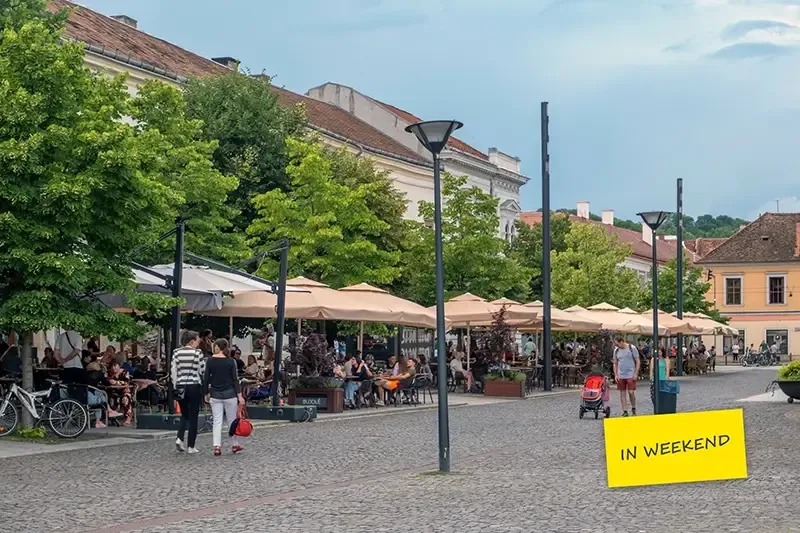
Cluj-Napoca is a city with a long history dating back to the times of the Dacians and Romans. It has always been an important cultural center, starting from the medieval period when it became a significant hub for the Orthodox Church and classical studies. In the 17th century, the city became an important center of the Protestant Reformation, and in the 19th century, it developed into a major center of Hungarian culture.
The city is renowned for its impressive architecture, which includes historic buildings such as St. Michael’s Cathedral, St. John’s Church on the Hill, and the Matthias House. It is also home to several museums, such as the National Museum of Art and the Ethnographic Museum of Transylvania, as well as theaters and performance halls.
Cluj-Napoca is also known for its vibrant cultural life, which includes music, theater, and film festivals, as well as an annual tulip festival that attracts visitors from across the country and abroad. The city is also a major academic center, hosting three important universities – Babeș-Bolyai University, the Technical University, and the University of Medicine and Pharmacy.
Cluj-Napoca is also renowned for its diverse gastronomy, which includes a variety of traditional Hungarian and Romanian dishes, as well as a growing modern culinary scene.